As societies continue to fracture along political, ethnic, and ideological lines, becoming aware of and being equipped to deal with various types of trauma is increasingly relevant for all of us in our families, everyday relationships, workplaces, and communities. Trauma-sensitive peacebuilding requires that we recognize and acknowledge how individual, communal, and historical harms are root causes of communal divisions. By cultivating our sensitivity to harm and incorporating trauma healing approaches in our relationships and work, we are better equipped as peacebuilders in our interpersonal and intergroup relationships.


malikoraci logo en sm2

Small Steps and The Peace Academy, with support from Religions for Peace Multireligious Humanitarian Fund, invites you to an online training: “The Effects of War on Individuals and Group(s) - Finding Hope in the Midst of Destruction.”  The training’s two lead trainers and guest are experienced peacebuilders and psychotherapists who have lived through the war in Bosnia and Herzegovina and Croatia.

A grant provided for this training allows all participants to join free of charge.

If you are from Ukraine or are an Ukrainian refugee, would like to learn the impact of trauma on an individual and group levels, and are seeking ways to help yourself and others address trauma and embark on the process of healing, please apply! 

Deadline for reserving your place in the training is 3rd of October, 2022.

The training will be held online, via Zoom, in English. 

It is our pleasure to inform you that the Peace Academy is offering the course entitled Building Environmental Movements in Divided Societies.  The course will offer an excellent opportunity for learning about the emergence and development of environmental movements and mobilization for spatial justice and collective action. This course will be offered as an online course where the participants will have the opportunity to attend the course remotely via the Zoom platform. 

The recent years have seen an unprecedented wave of mobilization around spatial and environmental-related issues. Environmental campaigning and ecological concerns have brought together different actors to stage protests and raise their voice for a better environment and the preservation of natural resources. Collective action for the environment has occurred also in societies divided along ethnic lines, where individuals of different background joined their forces to safeguard natural resources. This course aims to provide students with a critical reading of the main debates within the field of collective action in divided societies.  It draws on the literature on social movement studies and on deeply divided societies, with the contribution of scholars, local practitioners and activists engaged in the field inside and outside the region. Bosnia and Herzegovina constitutes a case in point for the study of social movements in divided societies, and in particular of environmental movements, which emerged and diffused nationwide in the last decade. The country represents in fact a critical and strategic case for the examination and understanding of the dynamics of mobilization in divided societies, at times challenging the existing theoretical assumptions, since over the last decade contentious collective action took place in spite of the country presenting a wide range of unfavourable conditions for its occurrence.

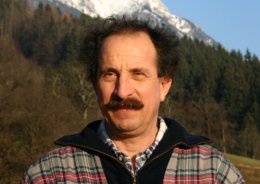
tonciWe are deeply saddened to hear the news that our colleague, long-time instructor in the Summer Peace Academy and friend, Tonči Kuzmanić, has passed away. 

You will always remain in the hearts and work of countless participants that your work inexorably inspired and shaped. „Think relentlessly!“

The Peace Academy Team